
Congress just moved the goalposts again. The federal enforcement deadline for hemp-derived intoxicating cannabinoids — the loophole that let delta-8 and delta-9 THC products sell nationwide as “hemp” — was pushed from Nov. 12 to Dec. 11, 2026, after a wave of lobbying from an industry now estimated at $28 billion by outlets including PBS NewsHour and Fortune this week. For any brand that built a vape line on hemp-derived THC, the extra 30 days isn’t relief. It’s a countdown, and the brands handling it best are the ones already lining up a vape hardware OEM that can move with them.
What Changed: The Deadline Moves, the Pressure Doesn’t
The underlying ban traces back to a provision that closed the 2018 Farm Bill’s hemp loophole — the same loophole Sen. Mitch McConnell’s original hemp legalization language made possible. Once synthesized hemp-derived THC products (gummies, drinks, and vapes alike) are off the table nationally, brands built around that supply chain lose their legal product overnight unless they reformulate or relicense. The 30-day push to Dec. 11 buys a bit more runway, but multiple law-firm trackers (Foley Hoag, Clark Hill, Hemp Law Group) describe it the same way: a temporary reprieve, not a reversal.
Why This Matters Beyond Hemp-Derived Brands
Here’s the detail that gets lost in the headlines: this ban targets hemp-derived intoxicating cannabinoids specifically — it does not touch state-licensed cannabis programs, where THC vapes made from actual cannabis flower, live resin, or rosin are regulated separately under state law. That distinction is exactly why this is a hardware story, not just a legal one. Brands currently selling hemp-derived THC vapes have two real paths forward: exit the category, or pivot their product line into state-licensed cannabis markets using cannabis-derived oil instead of synthesized hemp distillate. The second path only works if the hardware underneath can handle it.
The Real Fix Isn’t Legal — It’s Operational
A legal team can tell a brand what it can’t sell after Dec. 11. It can’t retool a device to run live rosin instead of thin hemp distillate, requalify a cartridge for a state’s testing panel, or get a compliant SKU into production before the deadline hits. That’s an OEM/ODM problem, and it’s the reason “which vape hardware OEM can move fast and prove its compliance paperwork” has become a more urgent question for brand owners than it was a month ago.
Why Choose DT
DT (Dreamer Tech) has spent its OEM/ODM history solving exactly this kind of hardware-side pivot for cannabis and hemp brands navigating shifting rules.
DT Vape Technology — Our patented Flavmax ceramic coil is built with a 12–15μm micropore structure for even distribution, atomizing a wider range of oil types — from thin distillate to thick live resin and rosin — with a porosity consistency error under 2%. That range matters directly to brands moving from hemp distillate into cannabis-derived extracts: the hardware doesn’t need to be re-engineered from scratch for the new oil.
DT Customization Solutions — Classic Customization delivers eye-catching, brand-differentiated finishes in as little as 1–2 weeks, while Exclusive Product Design takes a brand’s concept and builds a distinctive form factor from the ground up with our in-house design and engineering teams — critical when a brand needs a new, compliant SKU on a deadline rather than a redesign cycle measured in months.
DT Filling and Capping Solutions — Our automation platforms maximize fill/cap accuracy and output while minimizing labor, with wide-ranging compatibility across device formats and low investment thresholds — built for brands scaling a new product line quickly rather than building a production line from zero.
Hardware Built for the Pivot
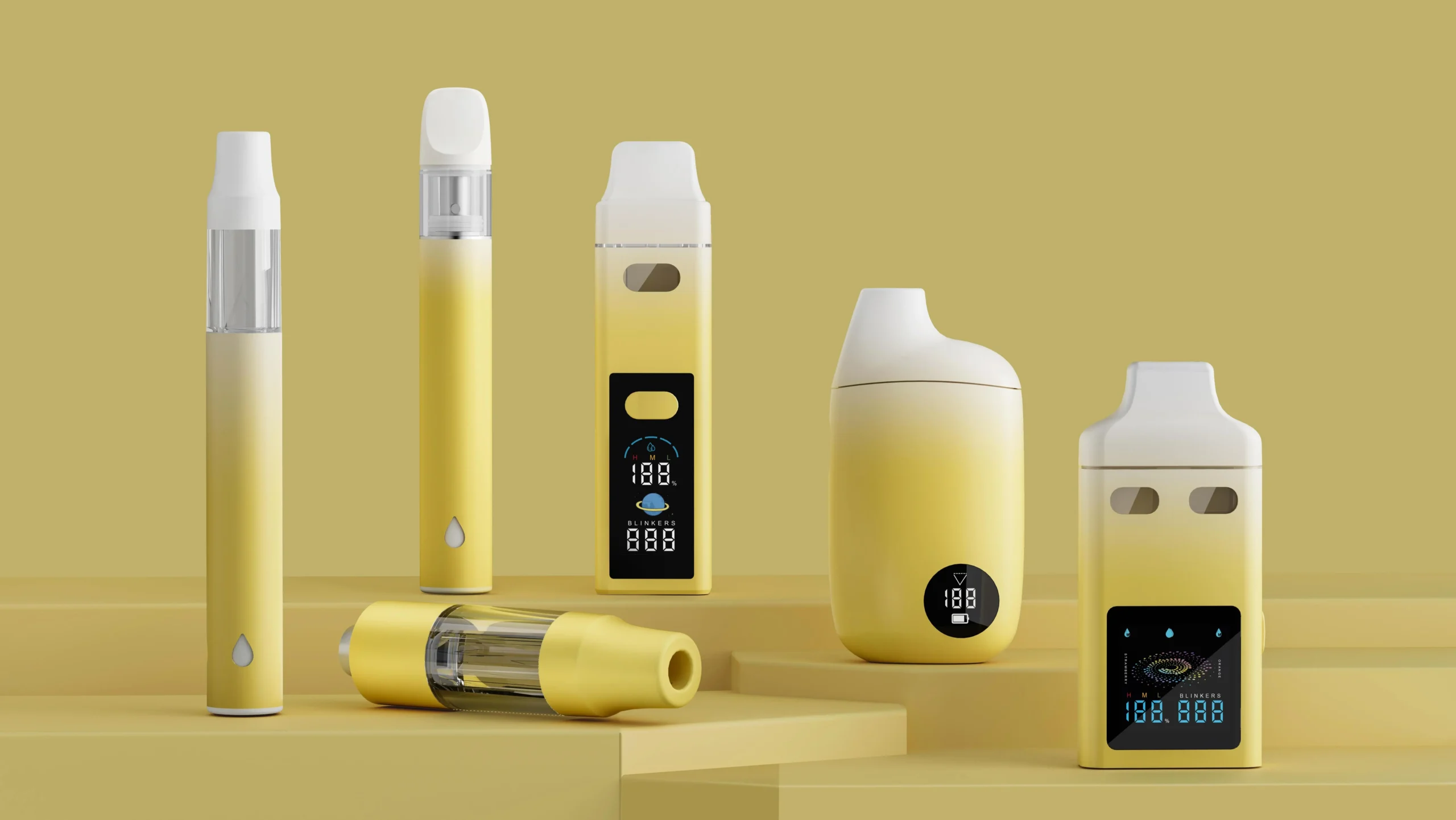
For brands reformulating around cannabis-derived oils ahead of the Dec. 11 deadline, two platforms in DT’s current lineup fit the transition particularly well:
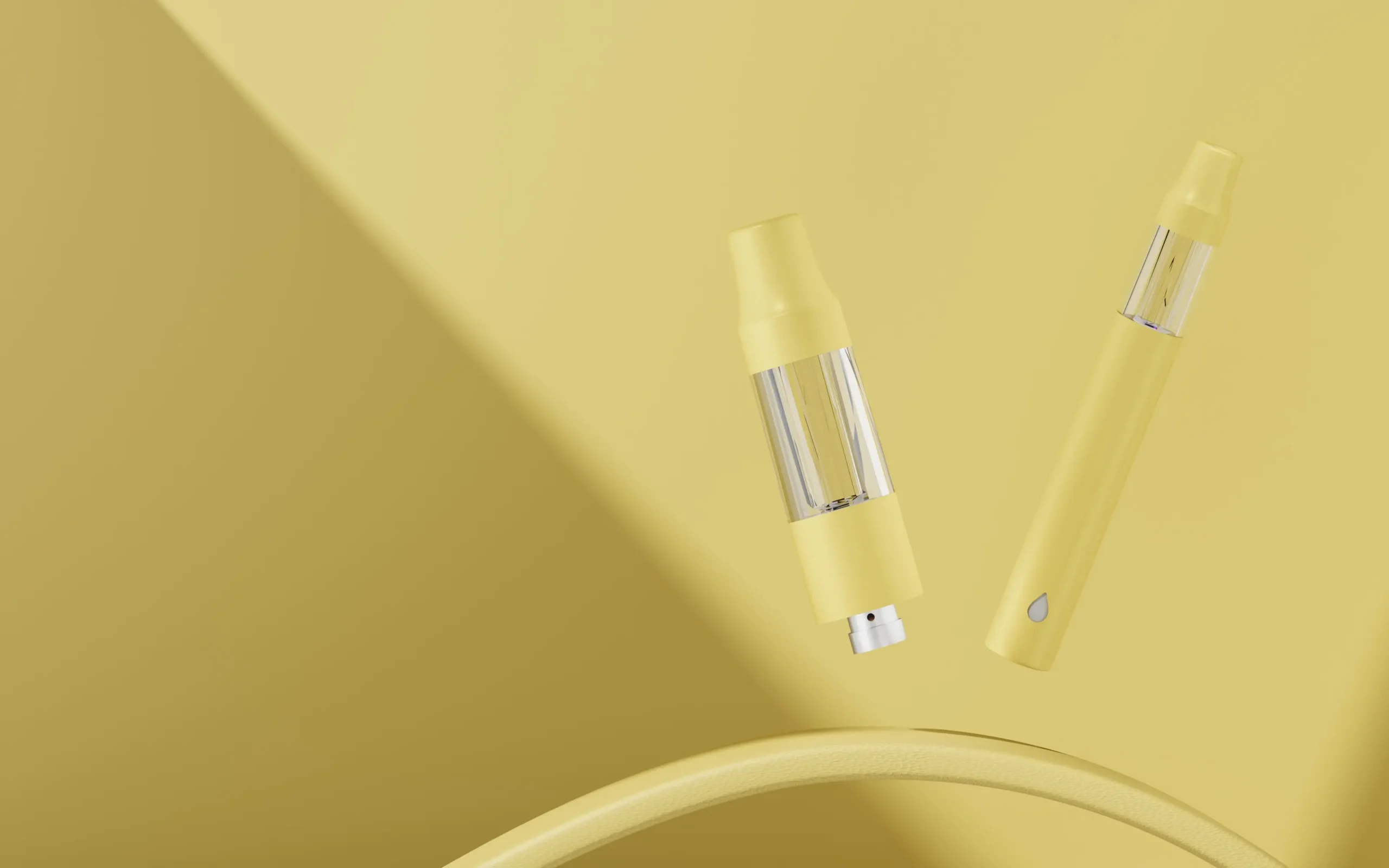
NOVA D59 — A postless, flat ceramic pod (1mL tank, 2mL oil-view window) built on our FlavWav ceramic core, explicitly compatible with distillate-plus-terpenes, live resin, rosin, and both D8/D9 formulations. For a brand moving from hemp distillate into cannabis-derived oil, that cross-compatibility means one hardware platform can carry the product through the transition instead of requiring a hardware swap mid-pivot. USB-C, 260mAh, live puff/battery/charge display, 66.5mm compact form.
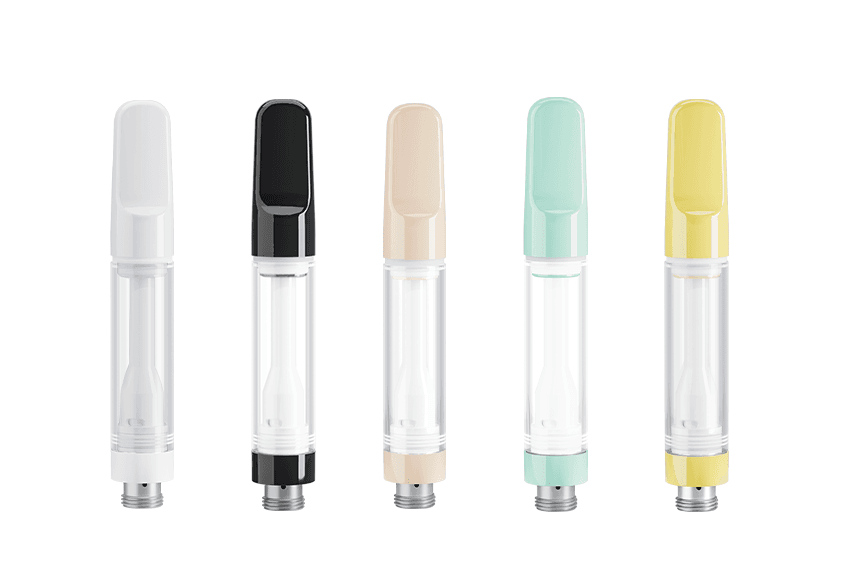
NEOVO D55 — A postless, universal 510-thread cartridge in food-grade PCTG with zero-leak design and a mini form factor. Because it’s 510-standard, brands can requalify into a new state-licensed supply chain without forcing retailers or distributors onto a proprietary battery system — a meaningful advantage when speed to compliant shelf space is the whole point.
Both platforms are available through DT’s standard OEM/ODM sample process, with Classic Customization turnaround in 1–2 weeks for brand-specific finishes.
Frequently Asked Questions
Does the federal hemp ban affect state-licensed cannabis vape brands?
No. The ban targets hemp-derived intoxicating cannabinoids sold under the 2018 Farm Bill’s hemp loophole — synthesized delta-8/delta-9 THC products. State-licensed cannabis programs, where products are made from regulated cannabis flower, live resin, or rosin, are governed separately under state law and are not the target of this federal action.
When does the hemp ban actually take effect?
The enforcement deadline was pushed from Nov. 12 to Dec. 11, 2026, following a 30-day extension reported this week by PBS NewsHour, Fortune, and multiple cannabis-law trackers, after industry pushback over the shorter timeline.
Can a hemp-derived THC vape brand just switch to cannabis-derived oil?
Legally, yes, through state licensing — but operationally it requires hardware that can handle a different oil viscosity profile (cannabis-derived live resin and rosin are typically thicker than hemp distillate) without clogging or uneven heating, plus requalified lab testing. That’s a hardware-OEM conversation, not just a legal one.
What should a brand look for in a vape hardware OEM during a transition like this?
Three things: oil-type flexibility (can the existing ceramic core handle thicker extracts without a redesign), documented compliance (lead-free/heavy-metal-free testing, ISO-certified manufacturing), and turnaround speed (can a customized SKU realistically ship before a hard deadline).
Is DT’s hardware pre-tested for lead and heavy metals?
Yes. DT’s manufacturing is ISO-certified, and devices are tested lead-free and heavy-metal-free as part of our standard quality process — documentation we can provide to brand partners for their own compliance records.
The Bottom Line
The Dec. 11 deadline isn’t the end of the hemp-derived THC conversation — it’s the point where “wait and see” stops being a strategy. Brands that move now, with hardware that’s ready for a different oil profile and a partner who can turn around a compliant SKU in weeks instead of months, will be the ones still on shelves in 2027.
Ready to talk through your transition? Request a free sample kit at dreamerecig.com and our team will help match the right hardware platform to your new product line.
This hook (the hemp-THC ban deadline moving to Dec. 11, breaking in major outlets Oct 3–4) is Law & Compliance-primary, which rotates away from the Health & Safety angle used on 9/26 and the Cannabis Marketing angle from 9/24. Let me know if you’d like the angle adjusted or a different product pairing.