
Published: September 26, 2026 | By the DT Product & Engineering Team
On September 24, 2026, Nevada’s Legislative Commission gave final approval to a sweeping set of marijuana regulations (LCB File No. R152-24) that had been working through the Cannabis Compliance Board since 2024. The headline change: the minimum lab sample size for usable marijuana testing doubles, from 10 grams to 20 grams, with expanded screening for microbial contaminants, pesticides, heavy metals, and potency. Industry commenters raised cost concerns about the larger samples during the process; the board moved forward anyway.
Nevada isn’t alone. State after state has spent 2026 tightening what gets tested and how thoroughly — a direct response to the same kind of contamination incidents that keep making headlines nationally. But nearly all of this regulatory attention is aimed at one half of the product: the oil. Heavy metals, pesticide residue, and microbial contamination get tested rigorously in the flower or extract. The hardware carrying that tested, compliant oil to the consumer is, in most states, subject to no equivalent testing regime at all. This post breaks down what that gap means for brands sourcing hardware — and why DT builds to a higher bar than current law requires.
The Compliance Gap Regulators Aren’t Closing Yet
A vape cartridge, pod, or battery that touches heated oil is a direct contact point — and every contact point is a potential source of the exact contaminants regulators are now working harder to screen out on the product side:
- Heavy metals from contact materials — solder, plating, and low-grade metal components in a heating element or connector can leach trace metals into vapor under heat, even when the oil tested clean at the lab.
- Degradation byproducts from poor heat control — a device without precise, chip-regulated temperature output can scorch clean oil into something that would fail the very contaminant panel Nevada just expanded.
- Cross-contamination in shared chambers — devices without properly isolated flavor or oil chambers can carry residue between fills, a variable no lab test on the original oil batch will ever catch.
Regulators are starting with the product side because that’s where testing infrastructure already exists. But a brand that only verifies its oil and never verifies its hardware is leaving that same risk category unaddressed on the device side.
What This Means for Brands Sourcing Hardware in a Tightening Regulatory Climate
As lab standards get stricter, the hardware bar has to rise with them. Brands evaluating an OEM/ODM partner right now should be asking:
- Are all oil-contact materials independently verified lead-free and heavy-metal-free — not just “compliant with what regulators currently require,” but verified against the standard regulators are moving toward?
- Is manufacturing ISO-certified, meaning documented process control that holds up under a compliance audit, not a one-time claim?
- Does the device regulate temperature precisely, with chip-controlled, multi-mode voltage output that reduces the overheating that turns compliant oil into non-compliant vapor?
- Are flavor or oil chambers properly isolated, with postless, sealed designs that reduce cross-contamination risk no upstream lab test can catch?
Testing regimes like Nevada’s will keep expanding. The brands least exposed to the next round of scrutiny are the ones that already sourced hardware built ahead of the curve.
Why Choose DT
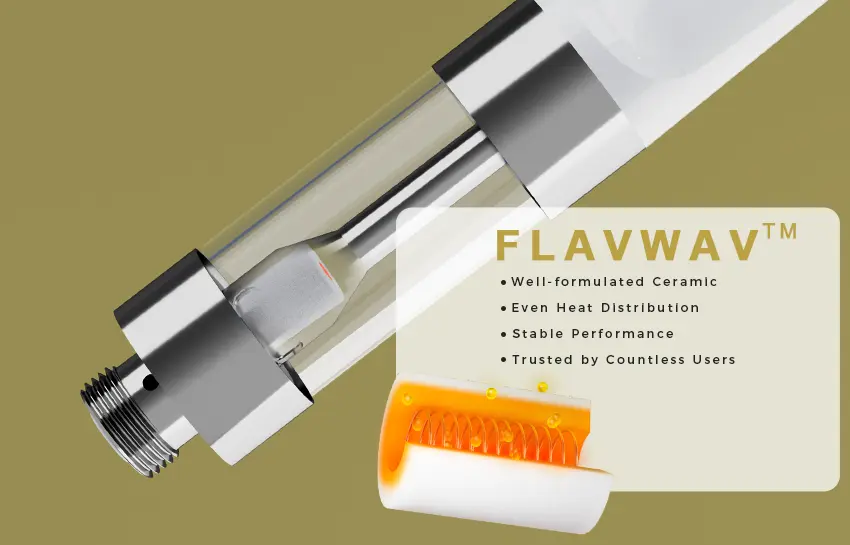
DT Vape Technology. DT’s patented Flavmax ceramic coil technology is engineered with a 12–15μm micropore structure for even oil distribution and consistent atomization across distillate, live resin, rosin, and more. Porosity consistency error stays under 2%, so the heating behavior — and the contamination risk profile — stays constant from the first unit off the line to the last.
DT Customization Solutions. Classic Customization delivers personalized finishes and distinctive secondary features in as little as 1–2 weeks, built on hardware that’s already ISO-certified and independently tested. Exclusive Product Design takes a brand from concept to a fully custom form factor engineered around its own oil and compliance requirements.
DT Filling and Capping Solutions. DT’s automated filling and capping platforms remove the human variability that leads to overfill, underfill, and seal-integrity inconsistency — the kind of variance that can turn a properly designed, compliant cartridge into a contamination or leak risk in the field.
Every DT device ships from ISO-certified manufacturing, independently tested for lead and heavy metals, and built to meet rigorous US compliance standards — before a single regulator ever asks the question.
Product Spotlight: Hardware Built for a Stricter Compliance Standard
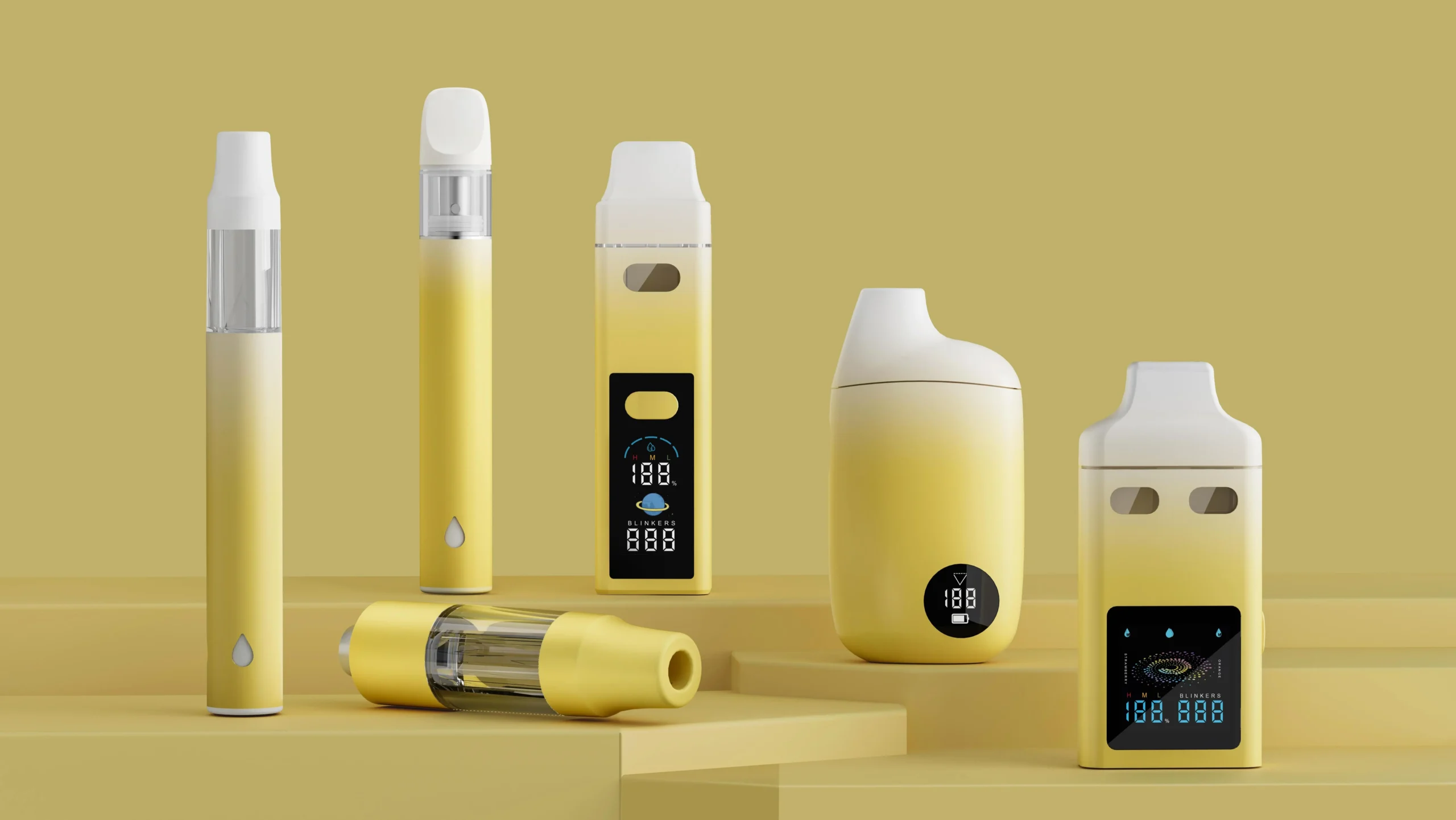
(Selected for relevance to this compliance/testing trend — not DT’s full 15-SKU catalog.)
- NEOVO D55 — A postless, universal 510-thread cartridge built in food-grade PCTG with a zero-leak seal design. Verified contact materials and a leak-proof structure make it a strong fit for brands tightening their own compliance posture ahead of the curve.
- CLOUVA D46 — Chip-powered, with precise three-mode temperature control and a 6mL large-capacity tank. Smart chip regulation replaces voltage guesswork, directly addressing the overheating risk that turns compliant oil into a contaminant-panel failure.
- HALO D58 — A postless dual-chamber, dual-flavor device (1mL+1mL or 1.5mL+1.5mL) with fully isolated FLAVWAV ceramic cores per chamber. Its center-post-free design is built specifically to prevent cross-contamination risk that single-lab-test verification can’t catch downstream.
FAQ
Q: Do vape hardware components need to pass the same lab tests as cannabis oil?
A: In most states, no — testing regulations like Nevada’s expanded standards apply to the cannabis product itself, not the device. That’s exactly why brands need to independently verify hardware safety rather than assuming device compliance is covered by product testing.
Q: How can hardware introduce contamination if the oil already tested clean?
A: Contact materials can leach trace heavy metals into vapor under heat, and poor temperature control can degrade otherwise-clean oil into byproducts that would fail a contaminant panel — even though the original oil passed testing.
Q: What should a brand ask its OEM hardware manufacturer given tightening state testing regulations?
A: Ask for independent lead/heavy-metal test reports on all oil-contact materials, ISO certification documentation, details on chip-based temperature regulation, and leak/chamber-isolation testing data — not just a spec sheet.
Q: How does chamber isolation reduce compliance risk in dual-flavor devices?
A: A postless, fully separated chamber design (like DT’s HALO D58) prevents oil or residue from migrating between compartments, eliminating a cross-contamination pathway that single-batch lab testing can’t detect once it’s in the device.
Closing CTA
Don’t wait for a regulator to ask the question your hardware supplier should already be able to answer. Request a free sample kit from DT’s ISO-certified, independently tested manufacturing line at dreamerecig.com and see what hardware built ahead of the compliance curve looks like.
Sources: Nevada Legislative Commission final approval, LCB File No. R152-24, September 24, 2026 (themarijuanaherald.com)