
Alaska’s Marijuana Control Board met on September 22, 2026 to weigh a proposal that would eliminate the state’s daily purchase caps on cannabis concentrates — currently set at 7 grams of inhalable concentrate and 5,600mg of combined THC per day. The change is part of a larger regulatory reform package (Administrative Order 360) still working through Alaska’s formal rulemaking process, so nothing is final yet. But the direction is telling: regulators are responding to a market that has already moved toward concentrates.
That shift shows up in the sales data too. Independent market reporting has tracked 2mL-plus vape device sales nearly doubling over a recent 12-month period, while smaller 1mL cartridges — still the category leader — have seen sales soften. At the same time, specialty extracts like live resin, rosin, and liquid diamonds are taking share from standard distillate, as consumers prioritize flavor and terpene fidelity alongside potency.
For cannabis and hemp brands, the takeaway isn’t just “concentrates are popular.” It’s that the hardware built for distillate often isn’t built for concentrates — and as purchase limits loosen and formulations diversify, that gap becomes a customer-facing problem.
Why Standard Hardware Struggles With Thick Oils
Live resin, rosin, and other high-viscosity extracts behave differently inside a vape cartridge than thin distillate:
- Uneven wicking. Traditional cotton or low-density wicks saturate unevenly with thick oil, leading to dry hits in some spots and flooding in others.
- Clogging and reduced airflow. Viscous oil moves slowly through standard wick channels, and residue buildup accelerates over the life of the cartridge.
- Flavor and terpene degradation. Inconsistent heat distribution scorches part of the oil load while under-heating the rest, muting the very terpene profile consumers are paying a premium for.
- Leaking under real-world handling. Thicker oils combined with loose tolerances in the cartridge-to-device seal are a common source of the leak complaints that show up in brand reviews.
None of this is a formulation problem — it’s a hardware problem. And it’s exactly the gap that purpose-built ceramic coil technology is designed to close.
What Concentrate-Ready Hardware Looks Like
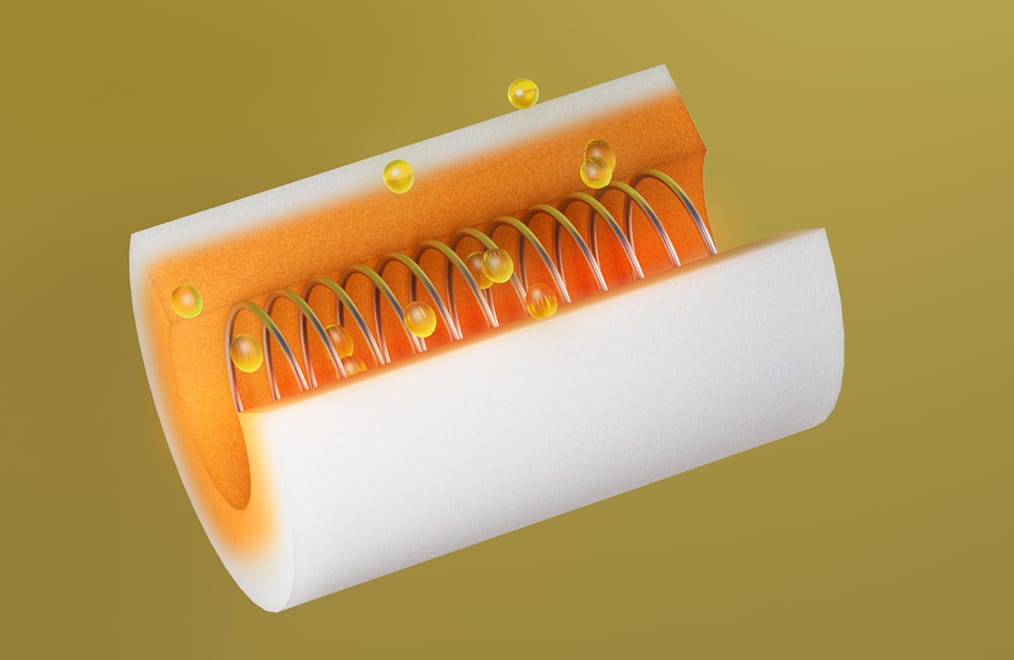
At Dreamer Tech (DT), we engineer specifically for this challenge. Our patented Flavmax ceramic coil uses a 12–15μm micropore structure with less than 2% porosity variance across production runs — meaning oil absorption and heat distribution stay consistent whether the formulation is thin distillate or thick live resin. That consistency is validated in our ISO-certified manufacturing process, not just claimed on a spec sheet, because a coil that performs in the lab but drifts in mass production doesn’t solve a brand’s real-world complaint volume.
For B2B brands watching the concentrate segment grow, the practical question isn’t “should we care about thick-oil performance” — it’s “does our current OEM/ODM partner already have hardware validated for it.”
Why Choose DT
DT Vape Technology
Our patented Flavmax ceramic coil technology uses a 12–15μm micropore structure that atomizes a wider range of terpene and oil viscosities evenly, with a consistency error of less than 2% in porosity — giving brands and their customers a stable experience across distillate, live resin, rosin, and D8/D9 formulations, batch after batch.
DT Customization Solutions
- Classic Customization: In as little as 1–2 weeks, our design team develops personalized finishes and distinctive secondary features that differentiate your brand on shelf or online.
- Exclusive Product Design: Our design and engineering teams build a distinctive form factor from the ground up, tailored to your specific oil formulations — concentrate, distillate, or both — so the hardware is engineered for what you’re actually filling it with.
DT Filling and Capping Solutions
Our automated filling and capping platforms are built for thick-oil compatibility as well as standard distillate, with wide-ranging compatibility, minimized labor, increased accuracy, and low investment relative to output — so scaling a concentrate-forward product line doesn’t mean re-engineering your production line.
Product Spotlight: Built for Concentrates and Live Resin
(Selected for this topic — not DT’s full 15-SKU catalog)
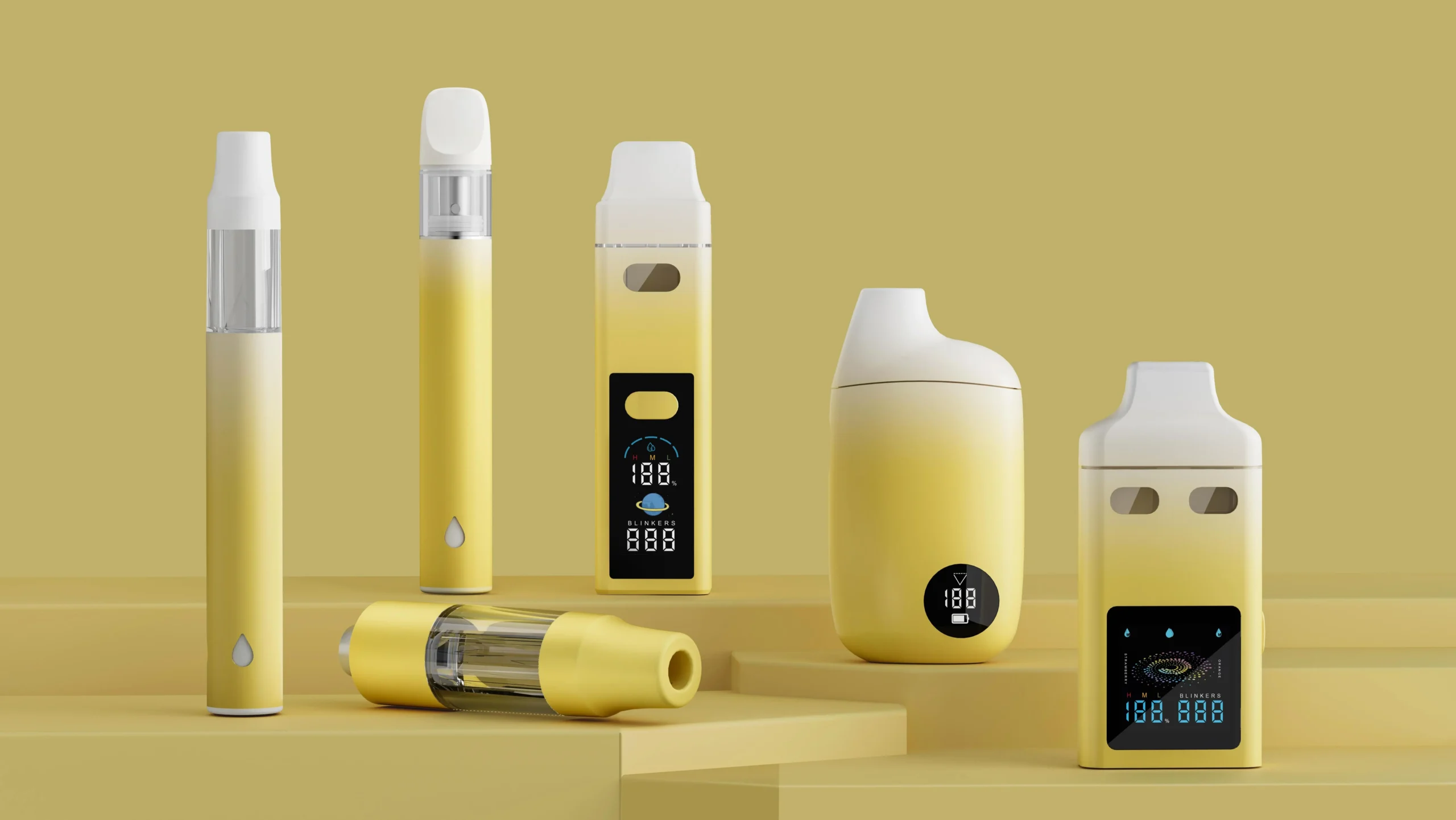
NOVA D59 — A postless flat ceramic pod explicitly compatible with distillate + terpenes, live resin, rosin, and D8/D9 formulations. The center-post-free design and FlavWav ceramic core reduce the hot-spotting that degrades thick-oil flavor, with a 2mL oil-view window, USB-C charging, and a live puff/battery display for end-user transparency.
CLOUVA D46 — For brands running higher-viscosity, higher-volume formulations, this chip-powered device offers a 6mL large-capacity tank with a FLAVWAX dual ceramic core and smart chip temperature control across 3 voltage modes — giving precise heat management for concentrate blends that punish less-controlled hardware.
NEOVO D55 — A universal 510-thread cartridge in food-grade PCTG with a zero-leak design, purpose-built for concentrate producers who need standard-fit compatibility without sacrificing seal integrity under thicker oil loads.
FAQ
Why do vape cartridges clog or leak with live resin and rosin?
Thick, high-viscosity extracts saturate standard cotton wicks unevenly and move slowly through narrow wick channels, which causes clogging, dry hits, and — when combined with loose seal tolerances — leaking. Ceramic coils with consistent micropore structure are designed to handle higher viscosity oils more evenly.
What’s the difference between ceramic and cotton coils for concentrates?
Ceramic coils offer a more uniform, engineered pore structure that doesn’t degrade or char the way cotton wicking can over repeated heating cycles, which supports more consistent flavor and vapor output specifically with thicker, terpene-rich extracts.
Are cannabis concentrate purchase limits changing nationwide?
Not uniformly. Alaska’s proposed changes are still in the rulemaking process as of this writing and apply only to Alaska. Purchase limits vary significantly by state, and brands should confirm current limits with local regulators rather than assume a single national standard.
How does DT validate coil performance across different oil types?
DT’s Flavmax ceramic coil is manufactured to a documented porosity tolerance (12–15μm micropore, under 2% variance) within our ISO-certified facility, and is tested across formulation types — including live resin and rosin — before being built into a client’s custom device.
What’s the typical OEM/ODM timeline for a concentrate-ready custom device?
Classic customization of an existing DT platform typically takes 1–2 weeks for sample development. Fully custom form-factor design (Exclusive Product Design) takes longer but is engineered around your specific oil formulation and volume needs from the start.
Closing CTA
Concentrate demand is growing faster than a lot of hardware was designed for — and as more states revisit their purchase limits, that gap will only get more visible to end consumers. If your current cartridges weren’t engineered for live resin, rosin, or high-viscosity blends, it shows up in your return rate before it shows up in a headline.
Request a free sample kit from DT and see how Flavmax ceramic coil technology performs with your own concentrate formulations: dreamerecig.com